
Clinical Research
Cohort Based Studies
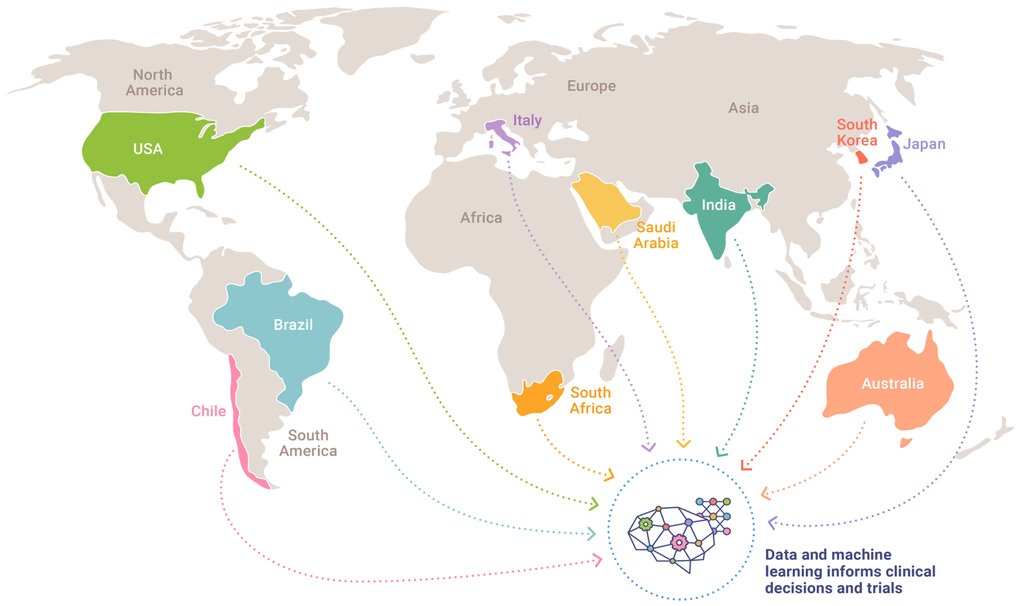
Global PETAL (Peripheral T-cell Lymphoma) CONSORTIUM
MGH has founded the PETAL Consortium a comprehensive international community of multiple clinical centers and principal investigators across 6 continents with specialized expertise in T-cell lymphoma who are committed to accelerating scientific breakthroughs into effective patient care. You can learn more about this initiative here
1. First Initiative
There has been a progressive increase in therapies for patients with relapsed and refractory (R/R) peripheral T-cell lymphoma (PTCL) in the last decade. However, their comparative efficacy to conventional chemotherapy (CC) globally remains unknown. As its first project, PETAL characterized the largest global dataset of patients with R/R PTCL (n=925). This highly annotated cohort has detailed clinical information ranging from baseline demographics through pathology, modern treatments, response characteristics, and stem cell transplantation. The cohort has enabled us to benchmark global trends in treatment strategies selected by physicians and their associated outcomes. We hypothesize that this critical advancement will inform the design of next generation clinical trials and treatment platforms for this heterogeneous neoplasm encompassing 34 different subtypes. Further, we demonstrated on a global scale that novel single agents including epigenetic therapies, small molecule inhibitors, and antibody drug conjugates are comparable to multiagent cytotoxic regimens. We are developing novel causal approaches that can estimate survival outcomes with minimal data.
2. Second Initiative
The PETAL Consortium is now enrolling participants in a prospective longitudinal observational study of newly diagnosed and R/R patients with PTCL. Patients will be registered in the study during the course of their first visit as a new patient at the local site and will be followed for up to 4 years through the course of their clinical management. Clinical outcomes will be correlated with molecular information of the tumor. Ultimately, these high dimensionality datasets will be leveraged for personalizing treatments for PTCL care.
Lymphoma Biorepository
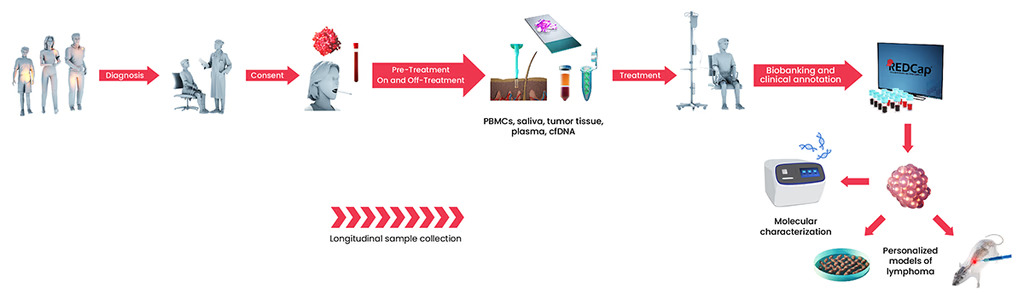
Alongside Drs Louissaint, Soumerai, and Abramson we participate in generation and malignance of a large tissue bank of serial patient-derived lymphoma specimens. These range across tumor biopsies, plasma, cfDNA, PBMCs, and saliva. The biorepository is correlated with a clinical database that is highly annotated with clinical, pathologic, and genetic information. This invaluable resource forms the backbone for the translational research efforts of all investigators in the lymphoma division, providing impetus to internal and external collaborations.